
22 September 2026 | Tuesday | Expert Opinion
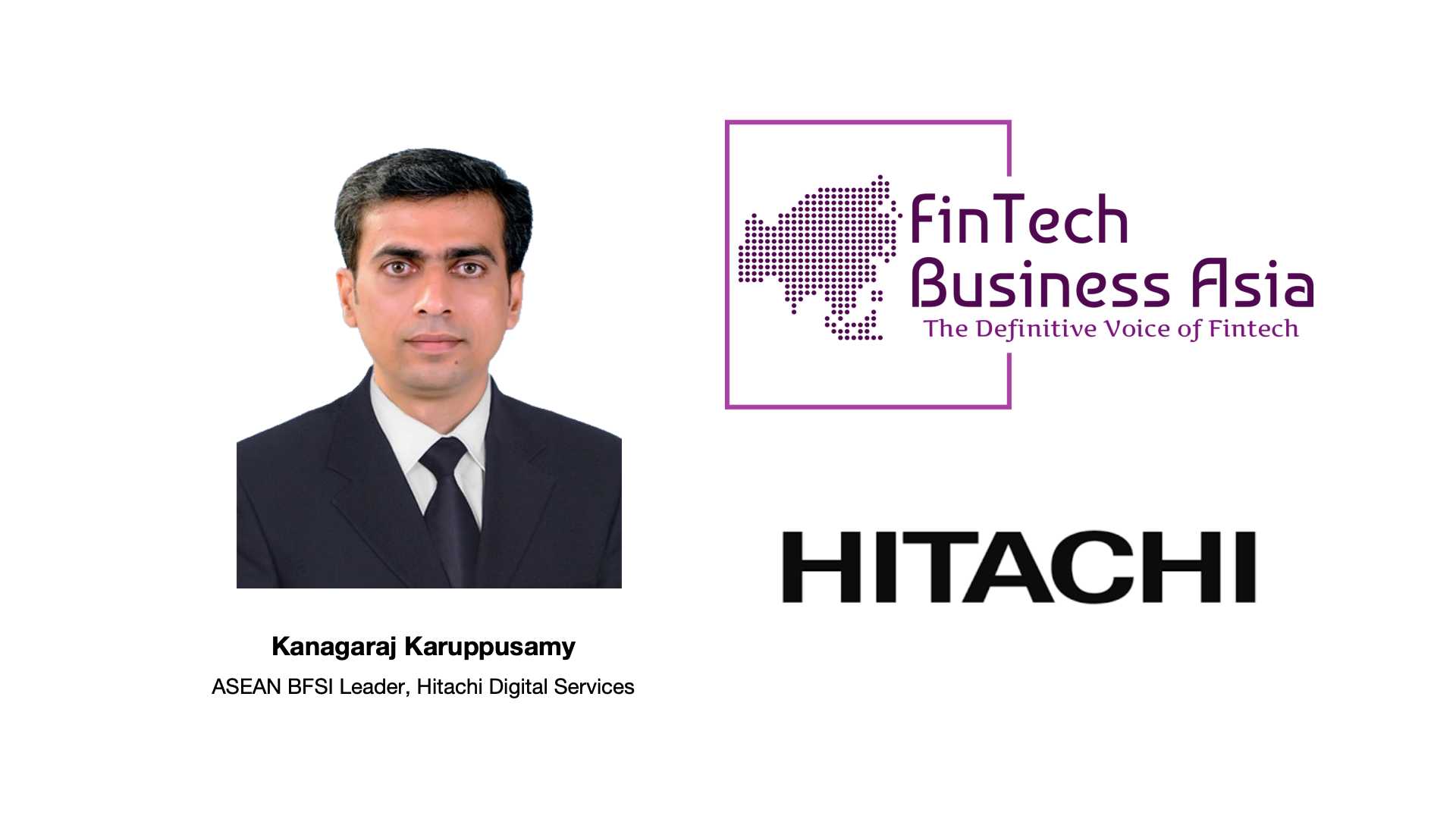
As agentic AI moves into live banking operations, the key challenge for ASEAN financial institutions is balancing greater automation with strong governance, accountability and trust. Kanagaraj Karuppusamy, ASEAN BFSI Leader at Hitachi Digital Services, shares his perspective on building a responsible path toward autonomous banking.
From AI Pilots to Autonomous Banking: ASEAN’s Trust Imperative
Scaling agentic AI without compromising control, accountability or trust
Across ASEAN, the AI conversation is moving rapidly from experimentation to execution. At recent Hitachi Digital Services banking, financial services and insurance events in Ho Chi Minh City and Bangkok, one question cut across the discussions: How can financial institutions move agentic AI into live operations without weakening control and compliance – and protecting the trust on which financial institutions depend?
Banks are already using AI to summarize documents, improve customer service and support decision-making but agentic AI raises the stakes – because it can go further. Unlike traditional AI applications that merely assist, agentic AI can actively participate in banking operations: it can pursue defined objectives, coordinate tasks, use enterprise systems and take actions within prescribed boundaries.
“The opportunity is substantial – but so is the responsibility,” says Kanagaraj Karuppusamy, ASEAN BFSI Leader, Hitachi Digital Services, Singapore.
Payment systems
Consider cross-border payments, something that is particularly relevant to ASEAN's digital future. Greater economic integration across the region is creating demand for faster, more transparent and cost-efficient movement of money. Yet cross-border transactions remain complex, involving multiple currencies, payment rails, regulatory requirements and compliance processes.
Agentic AI could act as an orchestration layer across this complexity. An agent could assess transaction information, identify the appropriate payment route, check compliance requirements, detect exceptions and coordinate downstream processes.
But capability must not be confused with authority.
An AI system may be technically capable of executing a transaction without being authorized to do so. Banks therefore need to clearly define boundaries around what an agent can access, recommend and execute.
This principle – separating capability from authority – will become fundamental to autonomous banking.
Responsible AI must evolve into agent governance
The move from AI recommendations to AI action creates a new governance imperative as conventional model controls no longer cover the full risk.
An agent may access tools, cross a permission boundary or trigger another agent before a team can intervene. Logging the event afterwards is not enough for consequential banking processes – responsible AI needs to become an operational capability.
“Autonomy cannot mean a loss of accountability,” emphasises Karuppusamy. “Banks need to know what an agent did, why it acted, which data and tools it used, and where a person approved the decision.”
Responsible AI must operate throughout the agent lifecycle.
To get technical: Institutions need to verify provenance before onboarding, control identities and permissions, test behavior, observe agents in production and enforce policy before an action occurs. Audit evidence should arise from the workflow itself, rather than being reconstructed when an examiner asks for it. Human review remains essential for decisions that affect customers, risk or compliance.
Start with friction that can be measured
The strongest near-term AI opportunities sit inside high-friction workflows. Event discussions highlighted commercial loan underwriting, fraud review, deposit tracking, collections, customer operations and insurance claims. These processes often involve large document sets, repetitive checks, fragmented data and time-sensitive decisions.
AI agents can gather information, extract relevant details, coordinate activities and recommend or execute approved actions. In lending, for example, agents can help process lengthy agreements and present evidence for human review. In fraud operations, they can assess images, metadata and transaction information against defined risk indicators. Treasury teams can use agents to bring together multiple data sources and run interest-rate scenarios much faster.
Institutions should select use cases with a clear process owner, sufficient data and a measurable source of friction. Cycle time, manual effort, error rates, throughput and customer impact provide practical measures of value. Integration into the existing workflow matters just as much. A disconnected demonstration may impress, but it will not change the economics or reliability of the operation.
Building the bank of the future
Agentic AI will ultimately change more than technology. It will reshape the operating model of banks.
Autonomous banking does not describe a bank without people. It describes an operating model in which people and AI agents work together.
“The future bank will combine human judgment with agents that can analyze information, coordinate work and execute approved actions,” says Karuppusamy. “People will remain responsible for the outcome, the controls and the trust customers place in the institution.”
The way forward is disciplined and incremental.
For ASEAN financial institutions, the move from pilots to autonomy offers a route to faster service, more efficient operations and better decisions. Those gains will endure only when every step toward greater autonomy also strengthens control, accountability and trust.





Fintech Business Asia, a business of FinTech Business Review
© 2026 FinTech Business Review. All Rights Reserved.