
29 May 2026 | Friday | Interaction
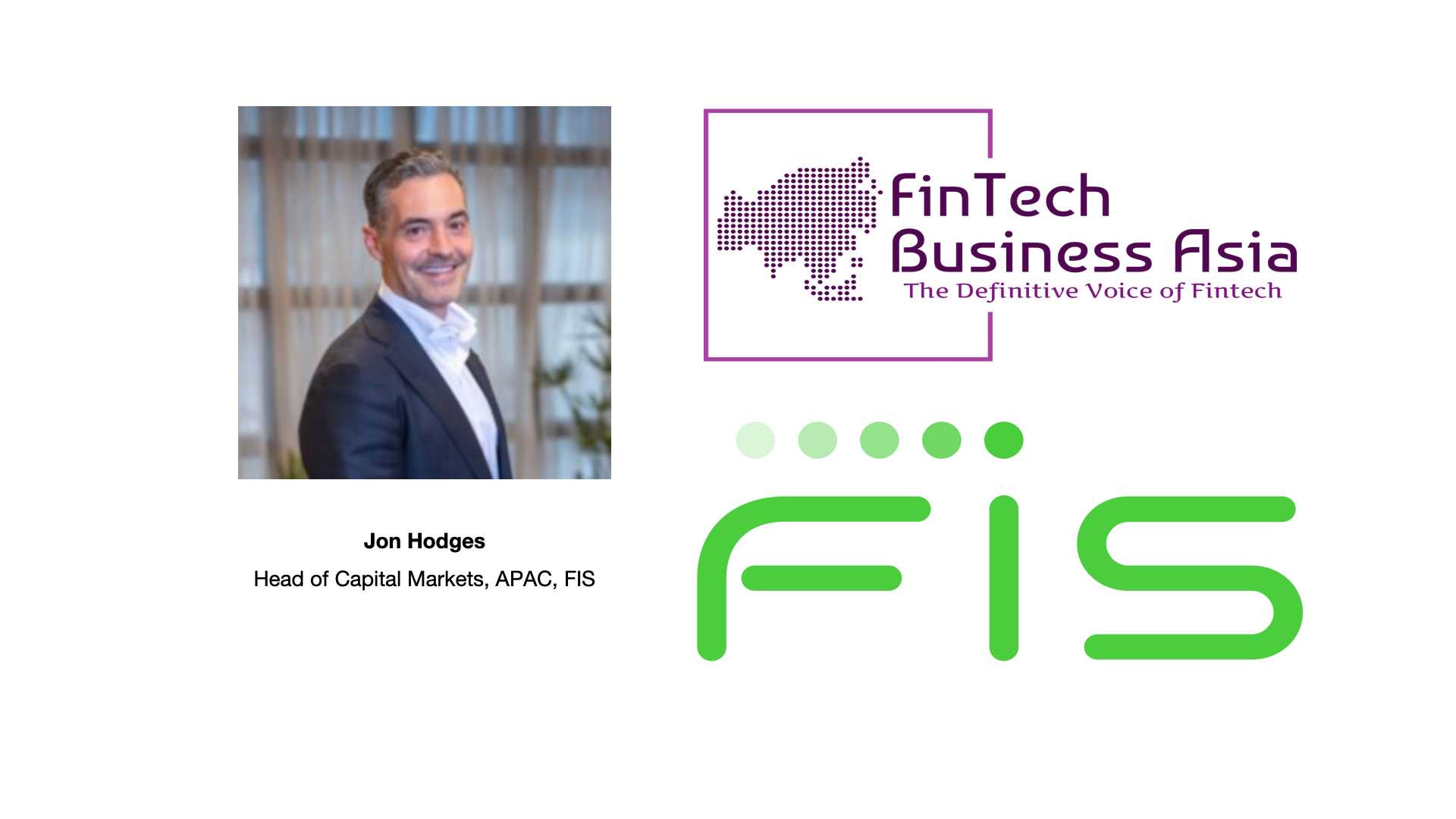
In an exclusive conversation with FinTech Business Asia, Jon Hodges, Head of Capital Markets, APAC at FIS, discusses how cloud-native infrastructure, AI-driven reconciliation, and operational resilience are reshaping financial institutions amid rising transaction complexity and real-time payment demands.
Q: Commonwealth Bank processes more than 150 million transactions daily. What were the biggest operational pain points this partnership aims to address, and why has reconciliation modernization become such a critical priority for large banks today?
A: At this scale, reconciliation is a foundational capability for any tier-one bank. Leading financial institutions are recognizing the opportunity to consolidate reconciliation onto a single, modern platform to enhance visibility, accelerate issue resolution, and strengthen operational control as transaction volumes increase.
By bringing all reconciliations onto one platform, banks gain real-time insight, automated exception management, and the ability to resolve issues in minutes rather than hours. Reconciliation modernization has become a priority because transaction volumes and regulatory expectations continue to grow, and banks are investing in resilient, scalable control frameworks that operate continuously across the enterprise to support real-time processing, customer trust, and operational confidence.
Q: FIS Data Integrity Manager is being delivered through a SaaS model on Microsoft Azure. How is cloud-native infrastructure reshaping the way global banks approach scalability, resilience, and back-office transformation?
A: Cloud-native infrastructure fundamentally changes the economics and agility of back-office operations. For global banks, it means elastic scalability to handle peak volumes, built-in resilience through multi-region design, and continuous enhancement without disruptive upgrades.
Delivering FIS Data Integrity Manager as a SaaS solution on Microsoft Azure provides enterprise-grade availability as standard and enables clients to focus on a consumption-based model while FIS handles hosting and continuous delivery. This reflects our broader strategy: we invest in infrastructure so clients can focus on their core business.
FIS continues to invest in technology to support our clients' need to scale quickly, including event-driven autoscaling to meet real-time processing expectations during volume spikes. Cloud enables banks to modernize control functions at the same pace as front-office innovation, embedding resilience, security, and efficiency into the platform.
Q: Reconciliation has traditionally been viewed as a back-office function, yet it is increasingly tied to customer experience and operational trust. How do you see intelligent reconciliation evolving into a strategic capability for financial institutions?
A: Reconciliation is becoming a real-time indicator of operational trust. When transactions settle instantly and customers expect immediate certainty, reconciliation failures surface directly as customer friction, liquidity stress, or regulatory exposure.
In a real-time, multi-rail world, the customer's perception of "payment success" is only as strong as the institution's ability to reconcile it instantly and accurately. Our responsibility has shifted from end-of-day matching to near real-time matching and reporting that can be actioned across the enterprise.
Intelligent reconciliation transforms static, after-the-fact controls into continuously operating capabilities. By embedding automation, real-time visibility, and analytics, banks can detect anomalies earlier, resolve issues faster, and prevent customer impact. This shifts reconciliation from cost center to value enabler.
Q: Financial institutions are facing growing complexity from real-time payments, embedded finance, and cross-border transactions. How does FIS ensure its reconciliation technology can adapt to increasingly fragmented and high-speed transaction ecosystems?
A: FIS Data Integrity Manager is source and format agnostic, able to ingest, normalize, and reconcile data from any system, any asset class, and any message format, including ISO 20022, real-time payment feeds, and third-party platforms.
The platform's high-performance architecture supports continuous processing and scales to massive volumes without compromising control or auditability. This allows banks to adapt as ecosystems evolve without re-architecting their control frameworks.
Our third-generation matching engine transforms reconciliation from a rules-based process into a self-learning, intelligent engine that improves accuracy, reduces cost, and scales with transaction complexity. This matters for the entire industry as real-time payments, embedded finance, and cross-border transactions become the norm.
Q: Security, compliance, and operational resilience remain central concerns for banks adopting cloud-based financial infrastructure. How is FIS balancing innovation with regulatory expectations, particularly for tier-one banking clients?
A: For tier-one banks, innovation only works within a robust regulatory and security framework. FIS designs and hosts cloud-native solutions that embed security, auditability, and resilience by default.
This includes ISO-aligned security controls, full audit trails, segregation of environments, and integration with client security platforms. The SaaS model ensures consistent patching, upgrades, and disaster recovery without introducing operational risk.
By working closely with client risk and compliance teams, FIS enables banks to modernize confidently while meeting regulatory expectations.
Q: FIS has recently expanded its focus on AI-driven banking and operational modernization. How does this CommBank engagement fit into FIS' broader vision for the future of intelligent and automated financial operations?
A: This engagement exemplifies FIS' broader vision: moving from reactive operations to intelligent, automated financial control environments.
Modern reconciliation platforms like Data Integrity Manager provide the data foundation and process discipline needed to apply AI responsibly, whether for anomaly detection, predictive alerting, or automated exception handling.
FIS is focused on delivering scalable, cloud-native control platforms that address today's volumes while positioning clients to adopt AI-driven capabilities over time. This reflects our strategy of combining enterprise-grade platforms with automation and intelligence to help banks operate faster, safer, and with greater confidence.





Fintech Business Asia, a business of FinTech Business Review
© 2026 FinTech Business Review. All Rights Reserved.